Currently content and layout is being updated and reformatted. (again)
Articles
Articles include a wide range of content including new (or updated) vehicle statistics, roleplaying information, and general updates on various projects.
The menu in the upper-right has sections for Heavy Gear Blitz! factions as well as specific topics for the Heavy Gear 4e RPG.
Guides
Guides tend to be occasionally-updated lists of sueful information like the converted plasic model assembly guide. Additionally there’s articles to help get players to useful resources like tools to build Heavy Gear Blitz! forces.
Editorial Policy
Please contact prof9844 on the Discord for questions about content.
Posted on November 23, 2023
|
3 min
|
618 words
|
DP9 Contributors
PD-04TR-S CUIRASSIER
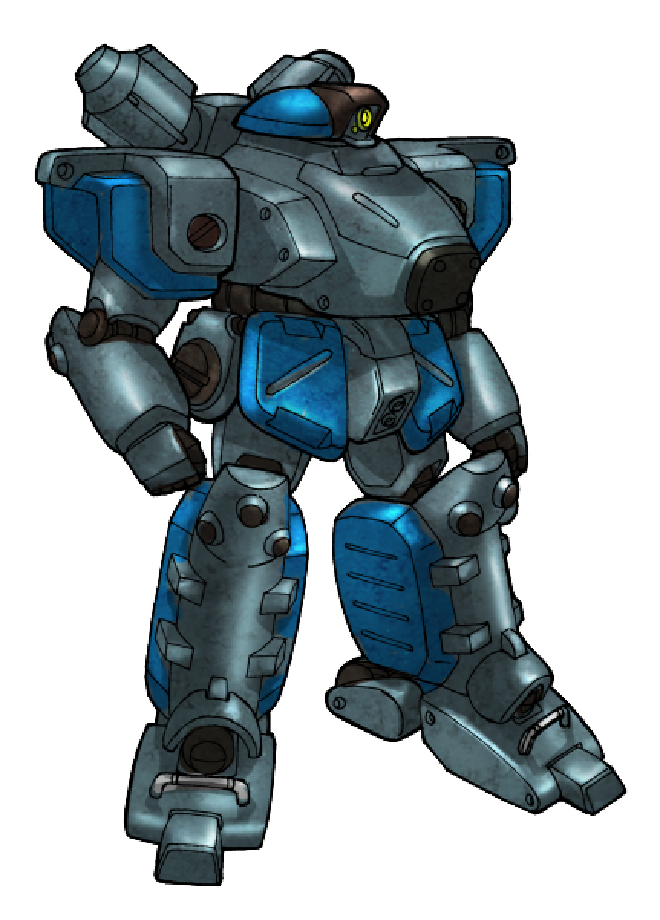
Originally conceived as the Humanist Alliance’s answer to the Territorial Arms Black Mamba, the Cuirasseir began its life at the HAPF’s White Rock facility in the spring of TN1920. In the post-War of the Alliance rearmament period, several Black Mambas were procured by the Humanist Alliance after repeated reports of how well the unit performed. While the Black Mamba suffered from a number of design deficiencies, most notably the fatally weak armor on the back, Humanist preceptors found that the Black Mamba to be a solidly engineered Gear. The retro engineering of the Black Mamba was called the Xiphos project and was initiated as part of the secretive long term defense protocols.
Posted on November 21, 2023
|
6 min
|
1182 words
|
DP9 Contributors
The Order of the Divine Crescent, often just shortened to ODC, is almost the equivalent of an honor society amongst the Shepherds. It is composed of the best and brightest of Sanctuary, and is not an official order within the Shepherds organizational structure. However, nearly every high ranking member of the Shepherds is a part, and for many joining is the aspiration of a lifetime. As with most similar societies in history, the ODC is open to members by invitation only. The exact entrance requirements and the process for being invited are not shared outside the ODC. On the whole, the ODC is composed only of exceptional individuals. From the military orders, high ranking commanders and elite aces are almost always members. From the civilian orders, outstanding logisticians, engineers, and scientists are invited into this prestigious organization. Theories about the entrance criteria are varied, and there is some inconsistency in who is allowed to join. Many people can point to seemingly deserving members who never get inducted while other notable but comparatively unremarkable members do get in. The method of invitation is simple, an envelope with the inductees name and the order’s crescent logo is left in their accommodations. The intrusion of privacy is bothersome to some but the reward is worth it.
Posted on November 16, 2023
|
2 min
|
352 words
|
DP9 Contributors
OACS-01M/AQ WASSERJÄGER
Lake Esperance moderates the temperatures of the Esperance basin, making the climate in most of the Republic unusually pleasant. The lake also provides a wonderful spot for the Strategic Forces branch to hide a few nuclear ballistic missile submarines. Unfortunately, the lake is also a great security risk and must be patrolled regularly to prevent Northern agents or internal enemies from establishing secret bases deep in its waters.
Posted on November 14, 2023
|
8 min
|
1534 words
|
DP9 Contributors
The Shepherds’ plan to launch a counterattack against the CEF consisted of two major offensive operations. The bulk of the 7th Fleet’s ground assets would deploy for an assault on Home, with the aim of opening a second front against the CEF. Home is a priority strategic target, and the 7th Fleet under Admiral Untide, with personal oversight from Grand Marshal Lucius Albrecht, is best suited for full-scale planetary assaults. Given their capacity to operate independently, though, many of the 7th Fleet’s ships are earmarked for the second prong of the counteroffensive.
Posted on November 9, 2023
|
5 min
|
995 words
|
DP9 Contributors
}
Please note this article was written before the current 3d Printed Bear miniature was released. The purchase links have been updated accordingly, but images still show the pewter miniatures.
HACS-01HG-FS Black Bear
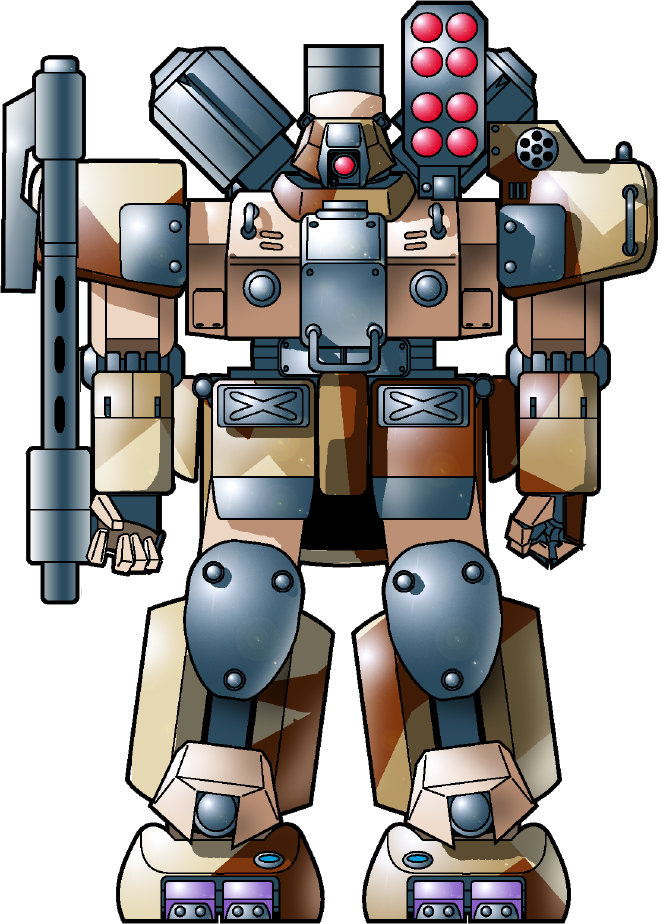
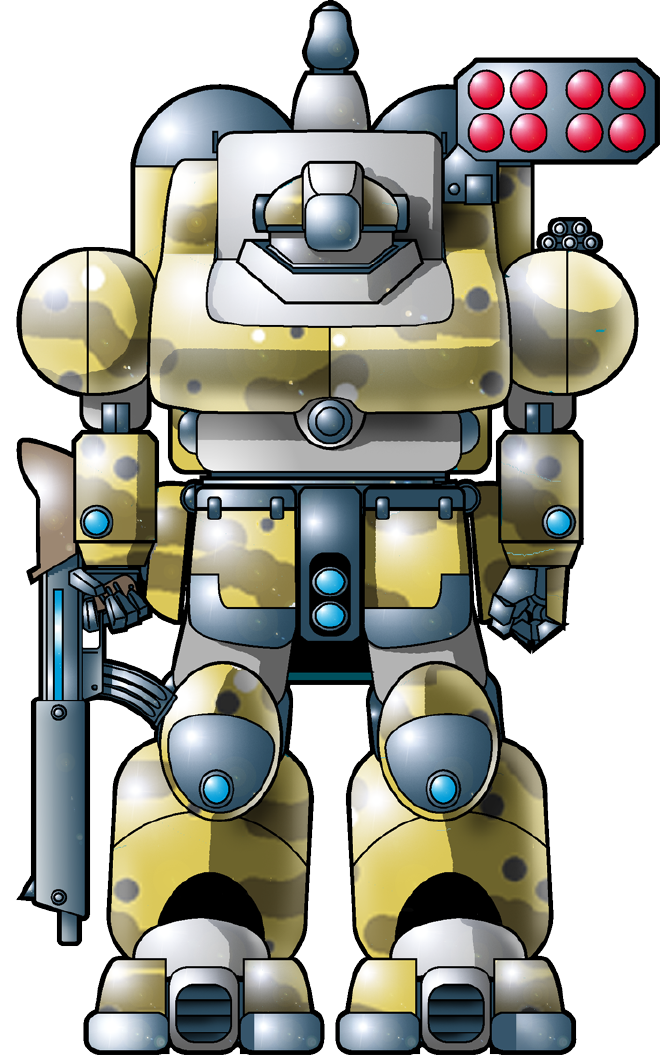
Black BearA straightforward refit of the standard Bear introduced in very small numbers in the TN 1850s, the Black Bear was designed to generally increase the firepower wielded by the Bear. The T-12 mortar unit’s precision was exchanged for the raw firepower of GH-25 85mm back-mounted rocket tubes, while other weaponry remained the same. The Black Bear was used to form some heavy fire-support squadrons, especially in the forces of the Western Frontier Protectorate Army. The Black Bear was largely retired when the Bear began to be slowly decommissioned with the introduction of the Grizzly in the TN 1870s. By the time of the War of the Alliance, the Bear was used most widely in the Badlands and became one of the heaviest machines able to be fielded by the rovers and guerrillas who fought rear-guard actions against the Colonial Expeditionary Force occupiers from TN 1913 to 1916. When Paxton Arms entered the fray and put together its Peace River Army many of these rag-tag forces were refitted with cutting edge weaponry and a new Black Bear configuration was fielded as a heavy assault vehicle, replacing the M225 autocannons with a cutting-edge RFL-2 Soothsayer rapid-fire bazooka.
Posted on November 7, 2023
|
7 min
|
1363 words
|
DP9 Contributors
The relief force for the 7th fleet went in with a much larger number of warships compared to the first invasion force. While some in CEF command were concerned with land resistance, most considered the renegade 7th fleet assets the major concern. The second invasion force arrived in the Nereus system 735 NJ to a cold welcome. The exit point for the gate was surrounded by a minefield of nuclear ordnance and armed warships. CEF forces pushed on and eventually cleared the field, forcing the Shepherds’ forces to withdraw or face annihilation. As the Shepherds’ space forces fell back the CEF commanders, sensing an opportunity, quickly began pursuit with a portion of their fleet. The rest was sent after the planet to begin the invasion proper. As the relief fleet extended itself, they were caught by complete surprise as the 7th Fleet jumped in from HO-03/5409.4 and took the gate point. With no place to fall back to, the surviving troop-ships disgorged their cargo on the planet as the scattered CEF warships were picked off or captured by their former comrades.
Posted on November 2, 2023
|
2 min
|
304 words
|
DP9 Contributors
A common misconception among Terranovans is that Utopian armies are composed entirely of armigers and N-KIDUs. This is false because for most of Utopian history the APE suit was used for piloted combat walkers. The APE is more than power armor but does not use a traditional seated cockpit like modern walkers. Instead, the pilot is housed in the central body compartment and their arms and legs extend slightly into the APE. This design is a direct descendant of worker suits during the Concordat era and similar designs are seen on Eden. Despite their near ancient design, APEs are still a common sight among the forces sent from Utopia to Terra Nova.
Posted on October 31, 2023
|
7 min
|
1448 words
|
DP9 Contributors
The aftermath of the Revelation saw the Shepherds begin to openly work with the various nations on the planet. Some proved to be willing allies in the fight against CEF holdouts, while others not only directly opposed the Shepherds but actively courted the support of the CEF remnants.
This period of conflict was used by the Shepherds as a chance to reorganize and better prepare for further aggression from Earth. Unit organization was changed with a heavier emphasis on sustainment elements. Mobile bases that could be used by company sized units were developed to allow smaller forces more strategic freedom from supply hubs. Airborne and orbital assets were expanded, and new satellites and warships were commissioned to create an early warning system against new threats. Defected 7th fleet personnel were tasked with drafting and quantifying CEF combat doctrine, and Shepherds line units were rotated through rigorous drills and training to learn the ins and outs of this style of warfare. Allied forces underwent similar training to operate alongside the Shepherds’ units as auxiliaries, although this training fell short of integrating the forces involved. New developments, techniques and attempts at coordination were used to combat the CEF forces still on the planet and those allied to them, ensuring that anything adopted was battle tested.
Posted on October 26, 2023
|
2 min
|
417 words
|
DP9 Contributors
OACS-05M/STL Green Mamba
Green Mamba
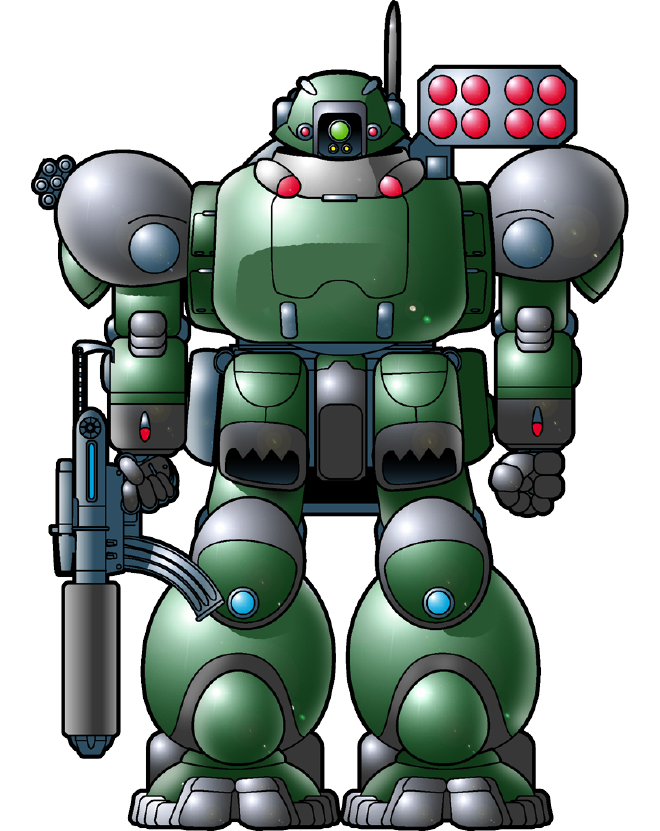
The aftermath of the War of the Alliance resulted in many new projects and initiatives in the AST. One major area of development was dedicated stealth gear, of which the south was lacking compared to the north. This produced the Chameleon and Snakeye Black Mamba which are both high end models. Demand for stealth units quickly outstripped production capacity and allotted funding as the many elite and special operations units of the AST wanted these new models to fill their ranks. Territorial Arms, seeing a potential niche in a new market, created the Green Mamba which saw its first major combat debut in the Interpolar War.
Posted on October 24, 2023
|
8 min
|
1514 words
|
DP9 Contributors
New Jerusalem’s isolation lasted until 728 NJ (6136 AD)l when a mysterious fleet of ships identifying themselves as the CEF 7th fleet gated into the system. The CEF observed the primitive armies of the various powers on the planet and judged them to be a non-threat. The Shepherds remained hidden, using centuries of experience to keep their strength unseen by these new visitors. Shepherds’ leadership set up a mission to contact the new arrivals. This diplomatic mission met with the CEF commanders’ multiple times, though what exactly transpired remains unknown to all not involved. When the last meeting was over, the CEF Admiral left and ordered his fleet to withdraw from the system, declaring he would no longer support the NEC. A brief power struggle saw him and some 75% of the fleet, including almost all the warships, break contact and jump out of the system. The remaining forces were stranded aboard their troop transports, now short on supplies and equipment, and were forced to make a decision. Seeing the pathetic nature of the defenders, they opted to continue their assault on the planet. They concentrated their landing zone in one largely uninhabited region to maximize their limited forces’ effect. As their units made landfall, Shepherd space forces struck. The remaining CEF ships in orbit were destroyed or captured, cutting off the ground forces who then found themselves attacked by an enemy far more advanced than they had anticipated. The initial landing zones, concentrated in forested regions to prevent observation, soon turned into furnaces as local forces lit them ablaze. The unique silicon-based composition of the trees burned off into ash which clogged CEF combat vehicles and caused breathing problems for infantry. Without the ability to take in air, hovertanks essentially became slow, static defenses. Frames fared better, but the failure of their hover systems put them at a mobility disadvantage against angels. The Shepherds struck repeatedly. and within weeks had functionally annihilated the invaders’ command structure. The CEF was reduced to a handful of highly fortified bases set up in the landing zone. Cut off from any hope of escape, the remaining forces fought much more ferociously than would typically be expected from the CEF on the defensive. By the time these pockets were liquidated, over 20% of the Shepherds’ pre-invasion combat strength had become casualties. Despite the Shepherds’ best efforts, a small significant portion of the invasion force managed to evade capture and would go in to form holdout cells across the planet.